
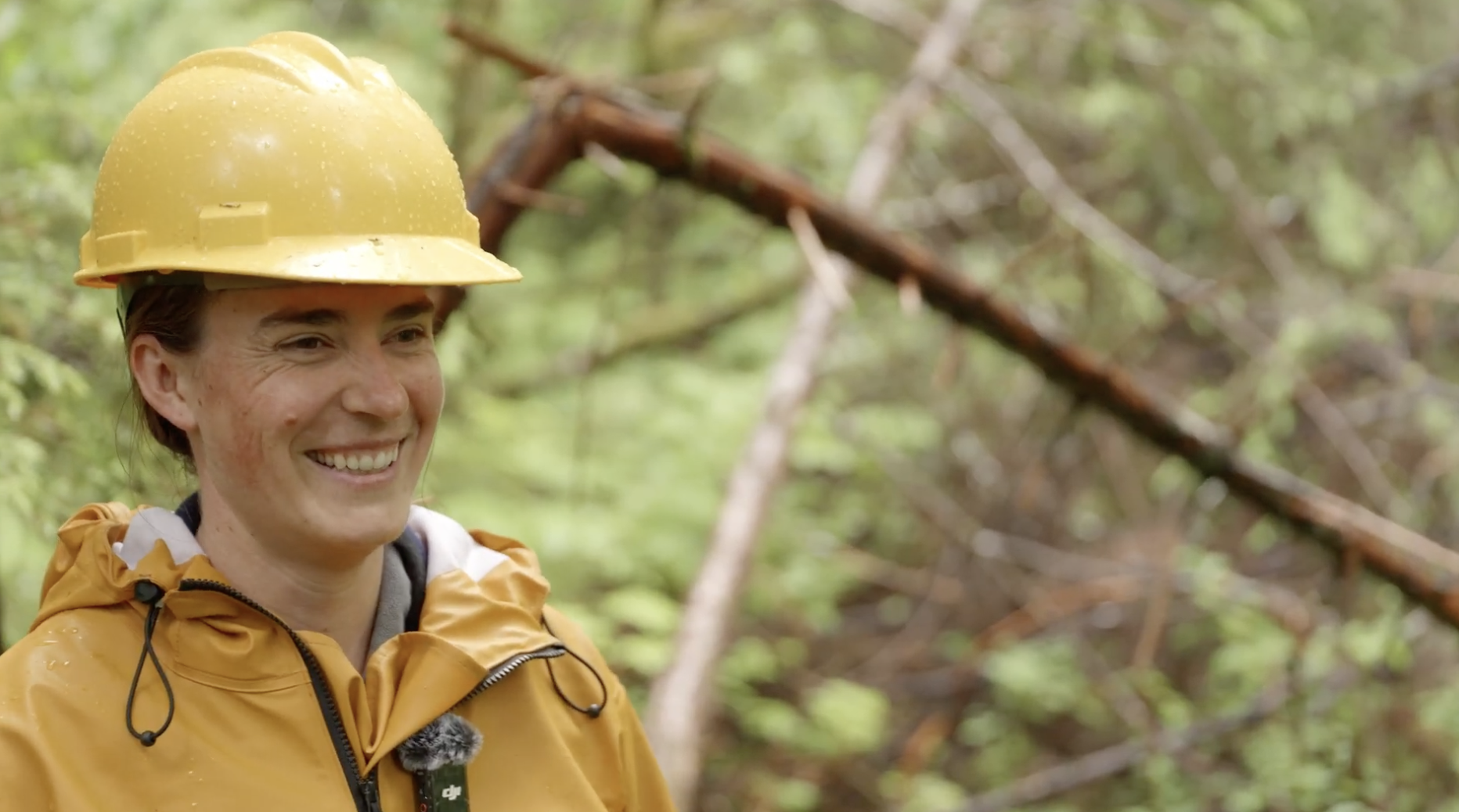
“I'm Kelsey Dean. I’m the watershed hydrologist at the Southeast Alaska Watershed Coalition, and I'm here to support the Forest Service, the Yakutat Tlingit Tribe, and the city crew in implementing a stream restoration project here at Center Creek.
Center Creek is a relic of World War II infrastructure. It's actually a ditch. What we're conducting our interview on now is an old road.
Back in the day, they essentially took soil next to it, made a road and water here in Yakutat, filled it up, and now it's a ditch, more or less.
But over the years, fish have started to use it and utilize it. Some spots have really good spawning gravel. There's groundwater influence, and so these sort of ditches that are streams — we call them “fitches” — are prevalent throughout Yakutat.
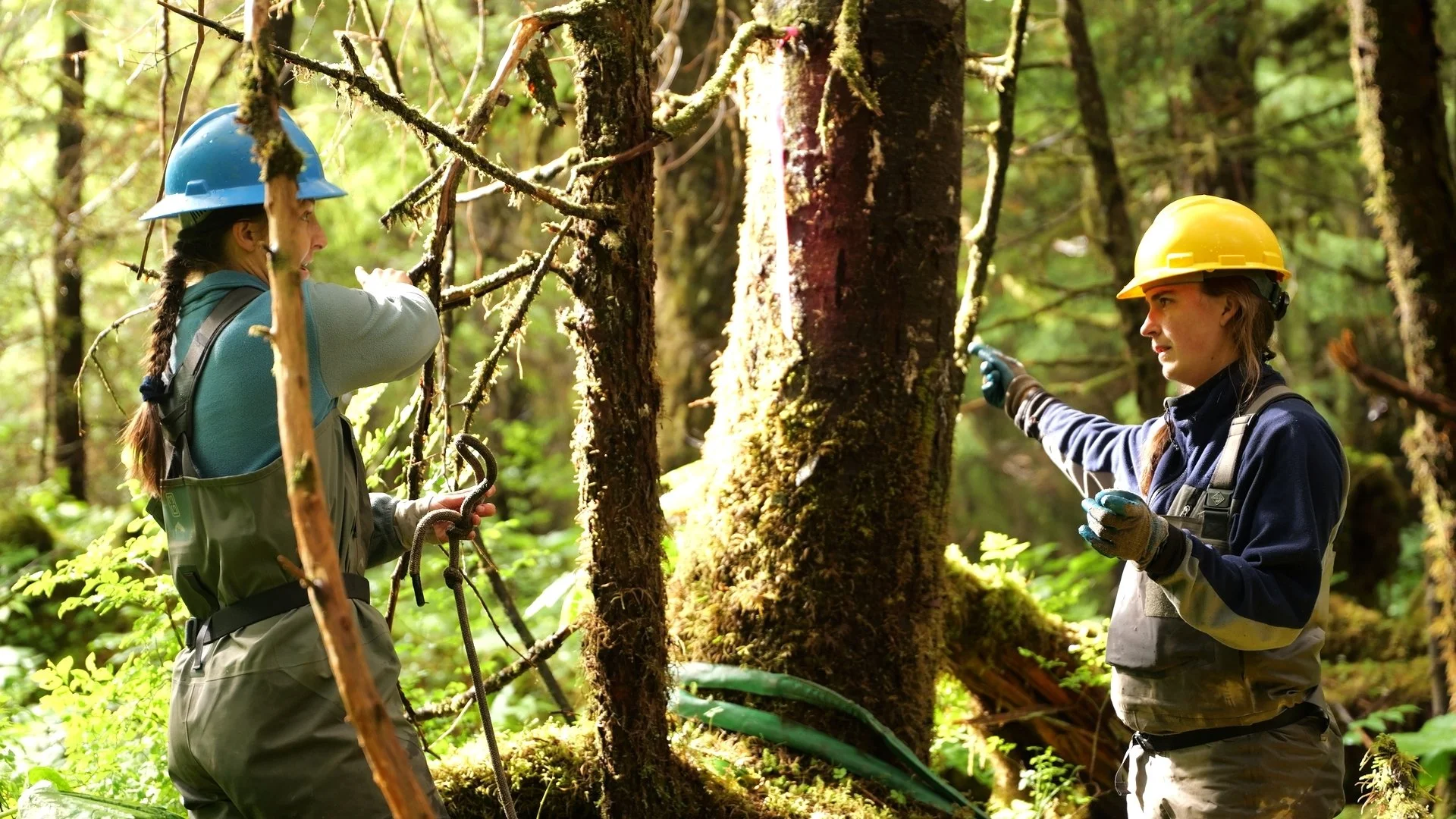
So what we're doing is just adding some large wood to enhance habitat features like pools or create spawning gravel, or add some cover for fish. Give it a little more natural of a feel.”
- Kelsey Dean, watershed hydrologist, Southeast Alaska Watershed Coalition
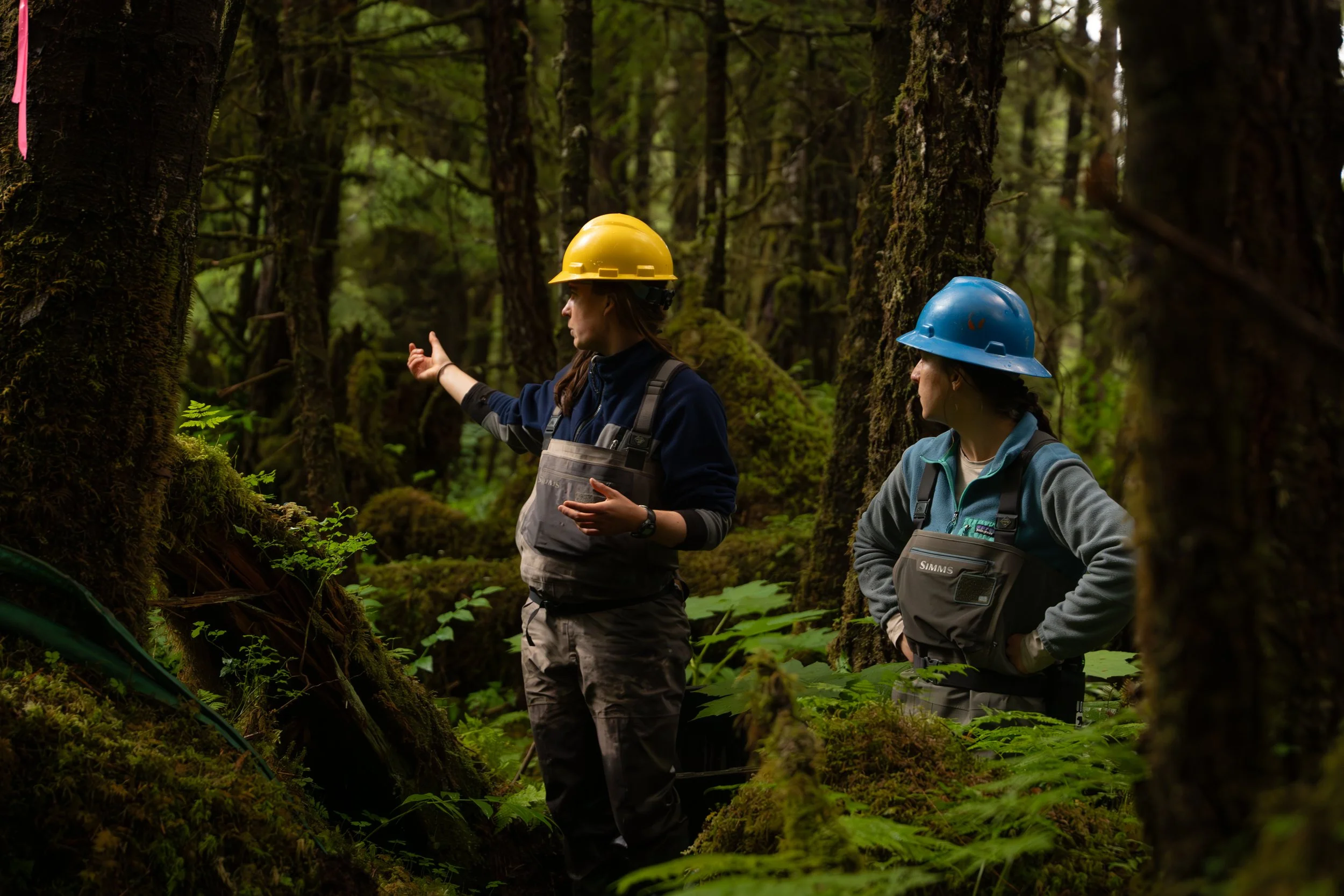
“Fish like diversity. They like pools to provide rest. They provide food, they provide refuge from warm weather. And they also provide refuge during the colder months, a place for fish to hang out. Gravel creates good spawning locations for eggs to be laid in. And wood is a key factor around Southeast Alaska in making some of these features. Without wood, you end up with sort of — straight bowling alleys, is what we like to call them. Where you're looking down a stream, there's no turns, there's no pools.
That's pretty boring for a fish and not great habitat. So by adding wood back in, we provide a lot of structure and the backbone to create that diverse, fun habitat that fish enjoy to live in.”
- Kelsey Dean, watershed hydrologist, Southeast Alaska Watershed Coalition
“The Yakutat forelands are definitely a unique landscape compared to the rest of the Southeast. They're a relic of glacial retreat. And so instead of these rolling hills and mountains that you see, you have these big glacial outwash plains. So compared to other parts of Southeast, it’s very flat. And it also produces a huge quantity of fish. The Situk is one of the best producing streams in Southeast. And unlike other places, there's not a lot of gradient. So you don't have these steep streams that come down from the mountains. Instead, you have these long foreland streams that are relatively flat, but provide still great quantity of habitat for fish.
Year round, there's also a lot of groundwater influences in streams here, which gives different temperature for fish to hang out in. They also can provide a later spawning run for fish because there is that groundwater that's cool. That’s especially important with climate change.”
- Kelsey Dean, watershed hydrologist, Southeast Alaska Watershed Coalition
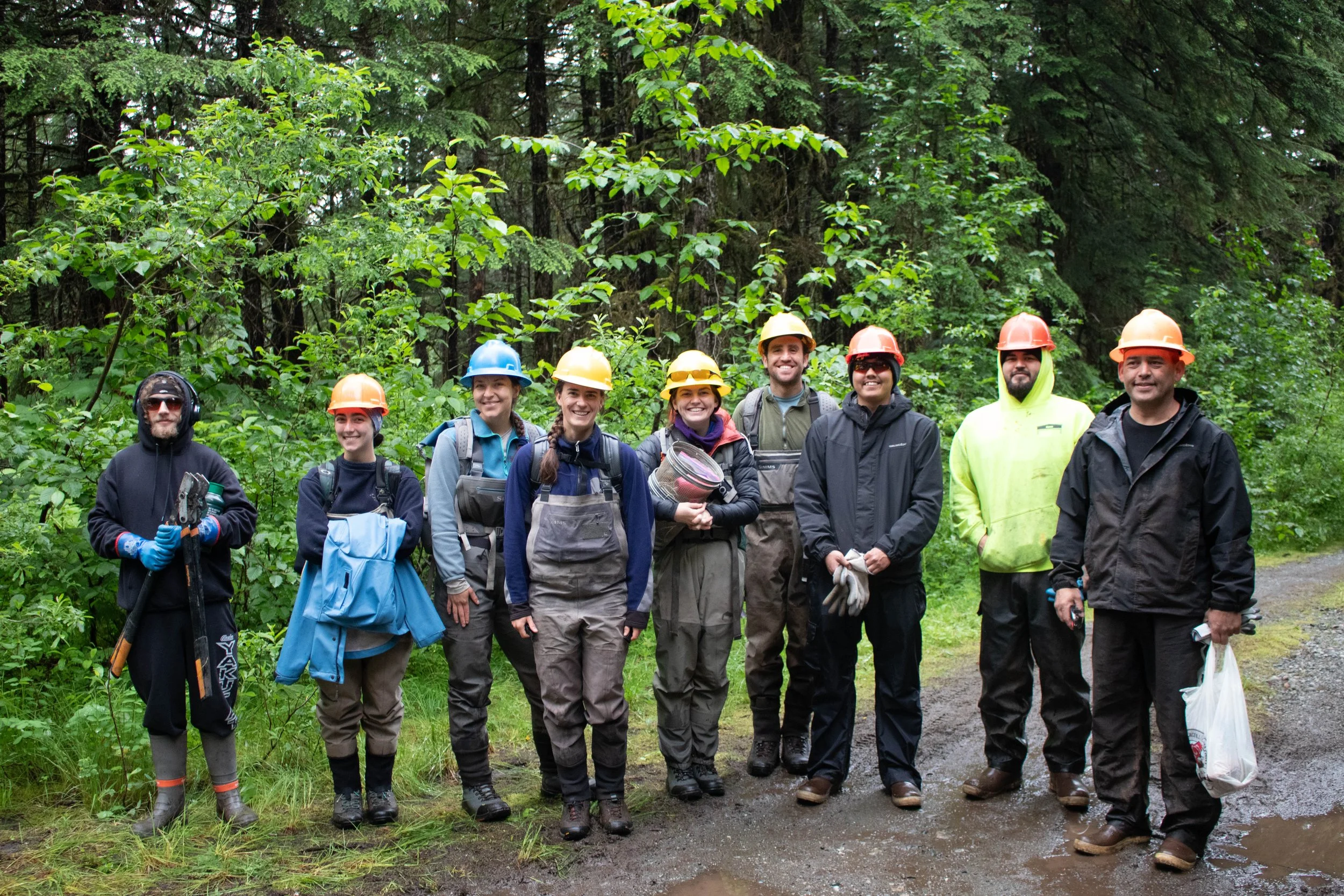
“The Yakutat salmon partners is kind of a coalition of the Forest Service. The Yakutat Tribe and the City have been almost 20 years doing a variety of restoration work and fish habitat work in the Yakutat forelands.
Southeast Alaska Watershed Coalition has become involved in the last couple of years in helping folks and sharing skills to step up the stream restoration game. This is the second project that SAWC has been a part of. Then, as well as there's other folks in the region doing culvert restoration work.
Trout Unlimited is providing a lot of funding and expertise for that. Partnerships really make the restoration around the region in Southeast work.
There's a lot of folks that want Yakutat to be a happy and healthy place for fish, for future generations to come populate them.”
- Kelsey Dean, watershed hydrologist, Southeast Alaska Watershed Coalition