
Last summer, Tlingit forager and filmmaker Mary Goddard challenged herself to eat only traditional Alaska Native foods for 90 Days. Now, she hopes to make a full-length documentary about the experience.
By Mary Catharine Martin
The Salmon State
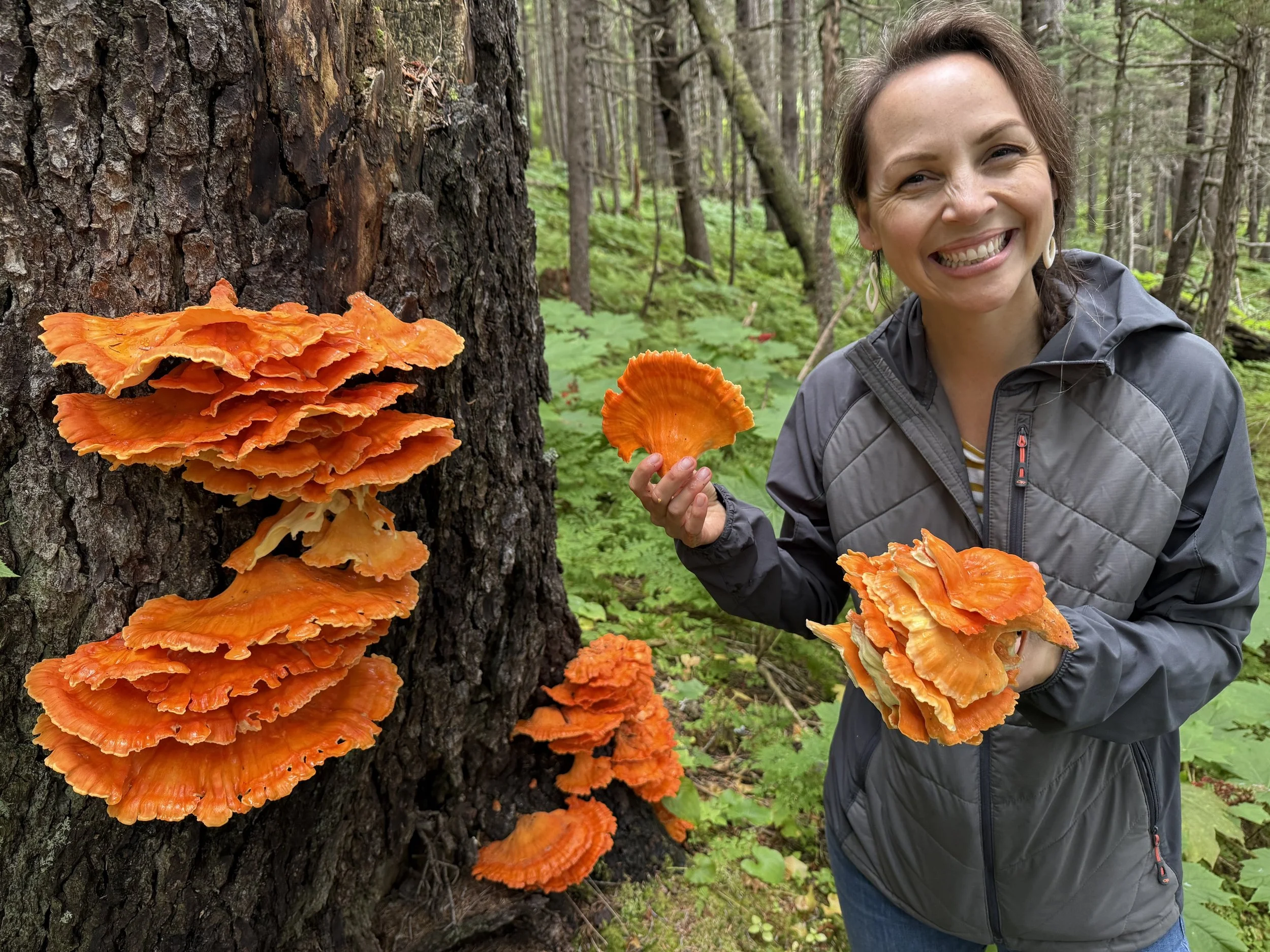
Mary grins over her abundant supply of Chicken of the Woods mushroom. Photo credit: Dave Fedorski
Mary Goddard has been eating wild and foraged foods her whole life. Last summer, however, she took it to another level, creating the “90-Day Native” challenge for herself — a time in which she only ate traditional Alaska Native foods.
Deer? Yes. Berries? Yes. Dryfish? Yes. Nettles? Yes. That tomato grown in a local garden? Didn’t make the cut.
Goddard is Tlingit and of the Kaagwaantaan clan, out of Klukwan. She grew up in Yakutat and now lives in Sitka. For many years, she has been thinking about food systems, and about how what we choose to eat not only shapes us, but the world around us. She also works in film and knew from the beginning that she would want to document the challenge and to track its impacts.
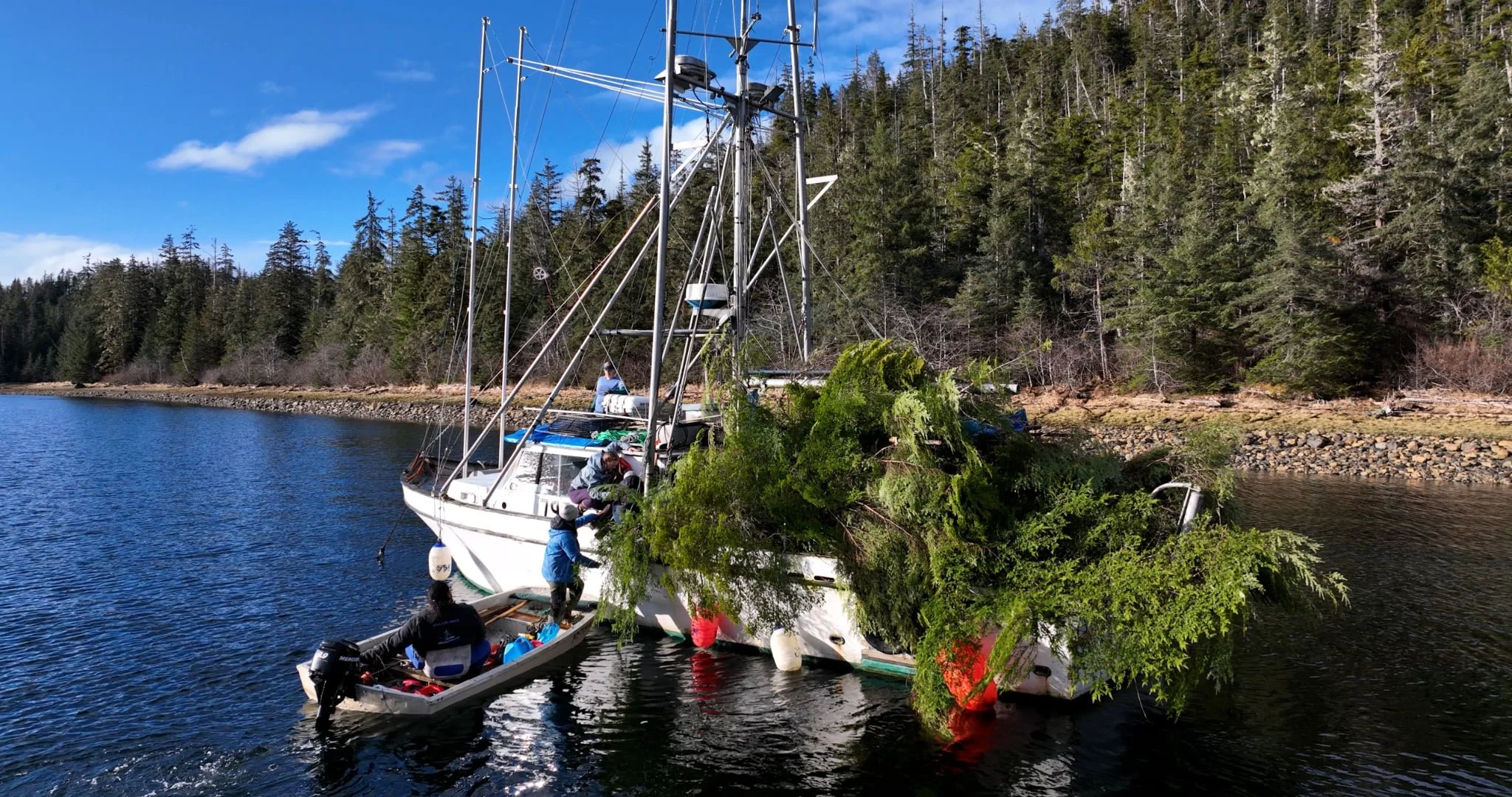
Mary helps set branches for the herring egg harvest. Photo credit: Dave Fedorski
“When we were discussing, for months, what TV shows we were going to do, all of it was culturally based and around food systems,” she said. “My business partner, Dave Fedorski, said ‘You want to do this anyways, TV show or not. Why don’t you just do it?’”
They documented the challenge on Goddard’s Instagram, Facebook, and YouTube, @alaskamary. It was “a new experience to be that vulnerable with people,” she said.
Goddard had three mentors throughout the challenge: Naomi Michalsen of Ketchikan; Rob Kinneen, known as “The Tlingit chef;” and Steve Johnson, a hands-on Sitka mentor.
Michalsen has a deep knowledge of Alaska Native plants, Goddard said. Kinneen has deep knowledge of traditional foods and how to prepare them. Johnson took her out gathering seaweed, herring eggs and fishing.
Friends and people she connected with on social media were also helpful. One person suggested getting birch syrup from the Anchorage area, which was a game-changer midway through the challenge. Another sent her muktuk. A friend brought her smoked octopus.
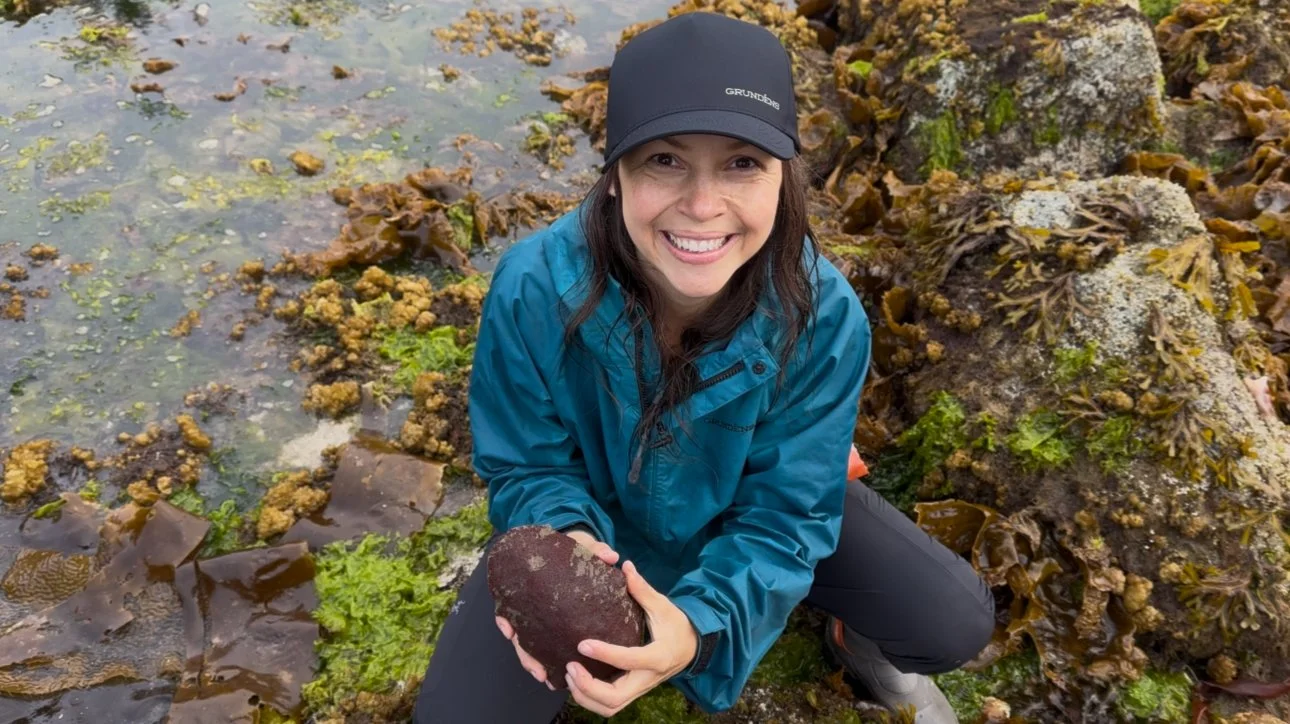
Mary holds a pink lady slipper gumboot. Photo credit: Lucas Goddard
Several foods, she ate for the first time — two different kinds of gumboots; uni, or sea urchin; sea cucumber. She gathered mushrooms. She made a whole cupboard of teas from different plants that grow in Sitka.
Dryfish was her version of fast food, she said, and “salmon was a staple. I had salmon nearly every day,” she said. “Just eating salmon you can feel the difference in your body. It’s so satisfying.”
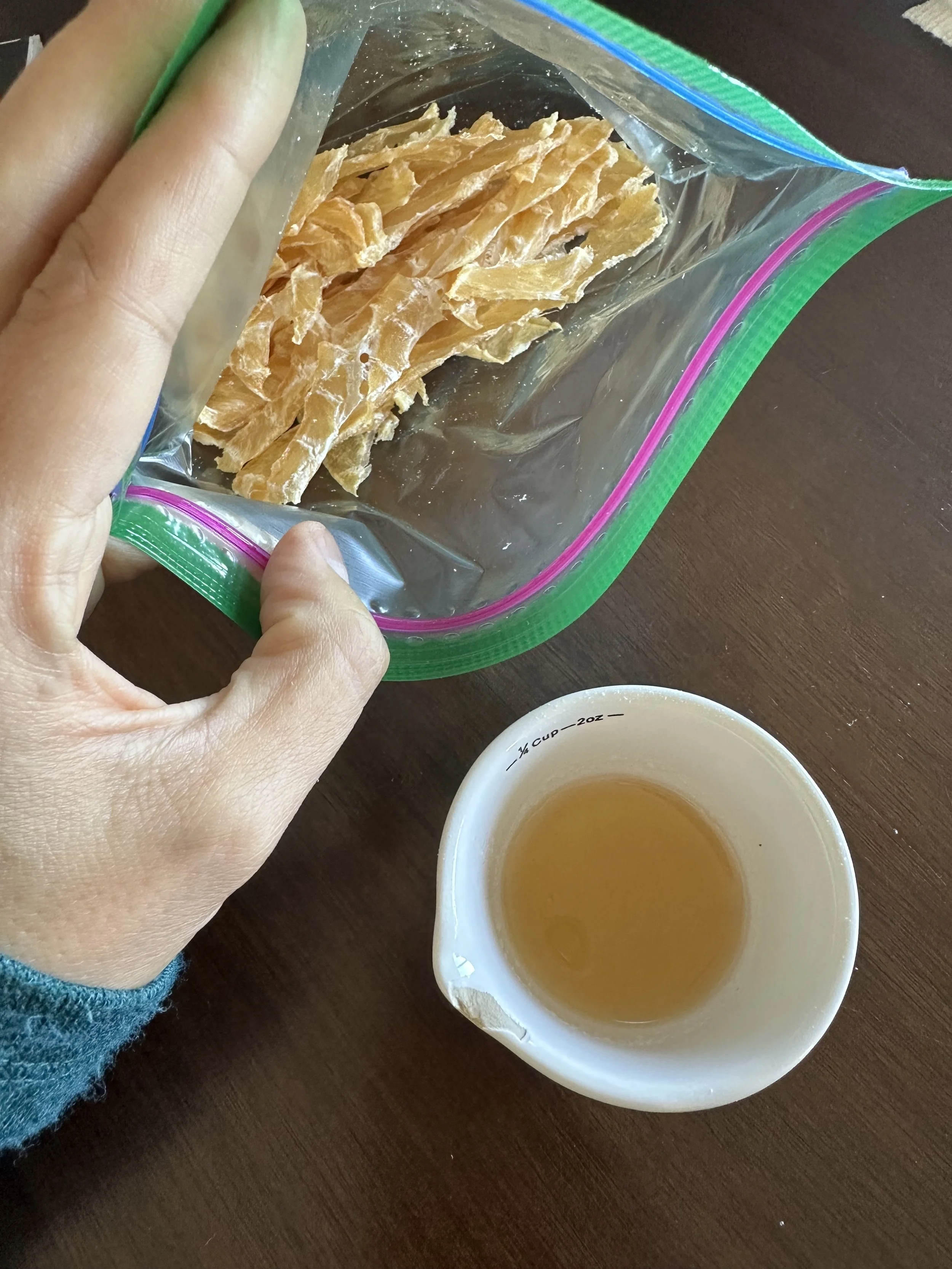
Dried halibut with salted seal oil for dipping: Mary Goddard
The challenge wasn’t easy socially. She couldn’t eat birthday cake at family birthday parties. Instead of eating from a food truck, she drank water at a local music festival and ate salmon when she got home. She had to be intentional even about how she cooked her food. Frying in olive oil, for example, was a no — instead, she used seal oil.
With limited carbohydrates, there was the challenge of getting enough calories.
A doctor and a nutritionist at SEARHC, Southeast Alaska Regional Health Consortium, tracked her health along the way. At first, they were concerned with her rapid weight loss.
“I really don’t know how to eat any more food on this diet,” she says at week seven.
On the plus side, she had no stomach issues over the 90 days. As someone who has celiac disease, an autoimmune disease that causes the body to attack the small intestine when a person eats gluten, she has been dealing with stomach issues for years.
A key difficulty she dealt with was living her normal life while doing the challenge, which was very time consuming to both find and prepare foods.
“Life is always going to have twists and turns and challenges,” she reflects at one point, asked if she could have chosen a better time. “I think if it’s something you want to go for, you should go for it.”
Looking back on the experience, “One of the common themes was guilt,” she said. “I’m filling my freezer with this mindset of ‘will I have enough?’ but I should share with Elders, and I wanted to share with an upcoming ku.éex' — potlatch. There was a lot of guilt in the beginning.”
“Eight months later,” she continued, “I actually don’t have guilt when it comes to eating — thoughts like ‘Oh, I shouldn’t eat that.’ As a result of this challenge, it’s not there.”
Goddard is now offering3-day Native food challenges for anyone interested in participating, raising money to create a full-length documentary on 90-Day Native, and speaking in schools about Native Alaskan foods and Alaska’s food system.
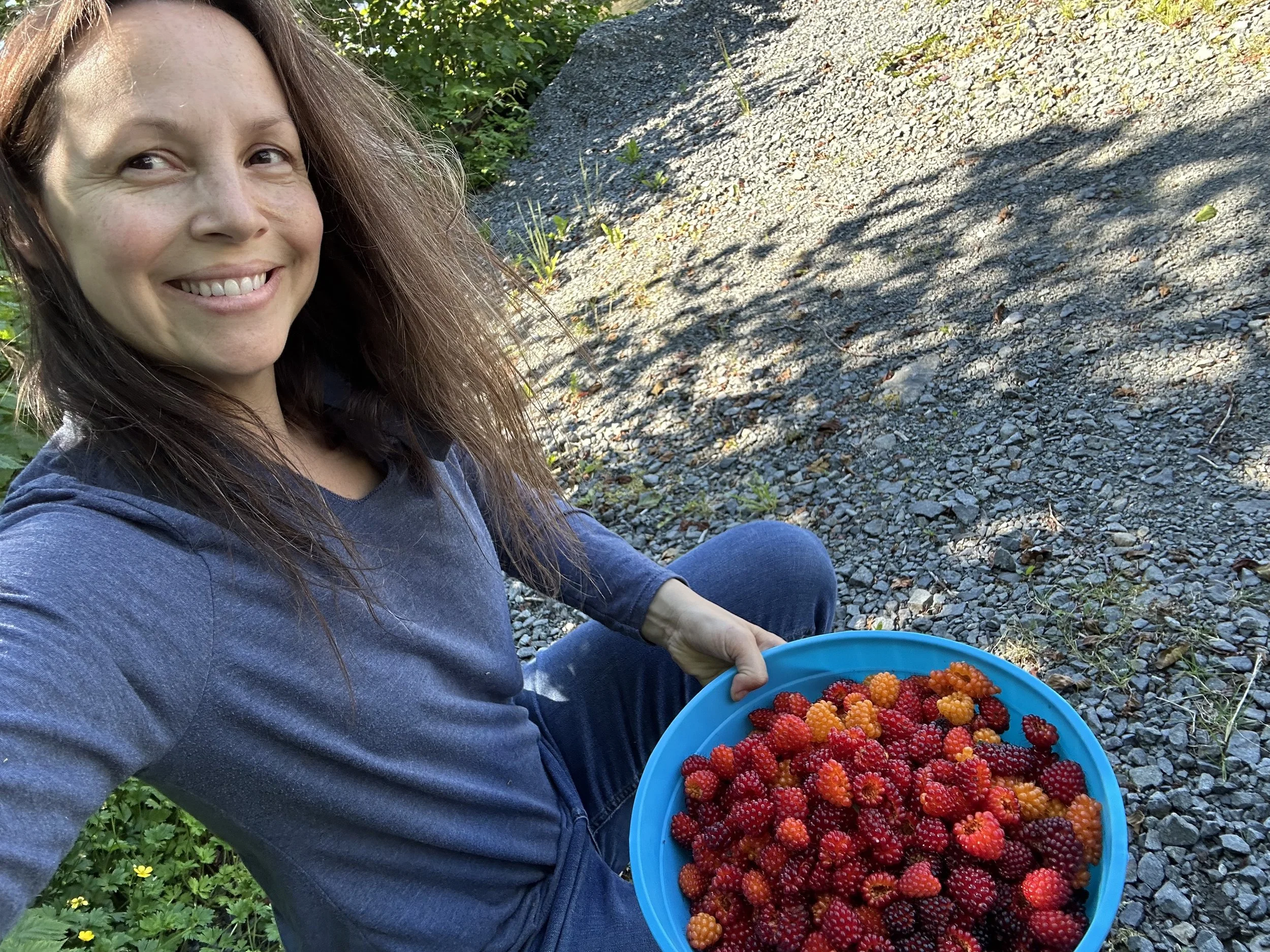
Mary holds a big bowl of salmonberries: Mary Goddard
“This challenge is not about perfection. It is about curiosity, connection, and taking one meaningful step toward understanding Alaska Native food systems that have nourished our communities for generations — and finding our way back to the foods, knowledge, and relationships that continue to sustain us,” she writes on her website.
“Food is culture,” Goddard says. “In foodways and systems like this, you understand that everything is interconnected. As we have changed our food systems, we have changed the way we live with the world around us. Eating Native foods — maybe it seems traditional, or culturally relevant, but really it’s getting you to see how you work with the world around you, versus systems that don’t take that into consideration.”